Moving From Hostels to Half a Million Cedis: The JED Story
March 24, 2026
•
11 min read
Before JED existed, there was something called Intelitech.
Intelitech was first brought up by my friend Joshua Richardson Owusu (JRO) (opens in new tab). Looking back, I think he saw something in me very early. The kind of person who can move things from zero to something meaningful. Someone who talks and then actually does the work.
One Saturday morning during our time at KNUST (opens in new tab), I received a call from JRO asking me to meet him at the Petroleum Building Tent (PB Tent). It was very early and extremely cold outside, but I decided to show up anyway.
I took my bath, left my hostel, and headed there with nothing. No laptop. No notebook.
Just myself.
When I got there, JRO had already arrived. He was seated with his diary open, fully prepared. That morning conversation ended up being the beginning of something much bigger than we imagined.
The Intelitech Idea
JRO started explaining the vision behind Intelitech. At that time it was operating like a small academy where students could join cohorts to learn coding.
He talked for a while about the structure, the idea, and how my skills could help keep the initiative running.
But I had another idea.
I told him something simple.
Yes, teaching people how to code is great. But what if we go beyond teaching? What if we also create opportunities, build real systems, and make real money while we are still students?
He started laughing.
But the conversation continued.
For hours we discussed ideas, structures, and possibilities. He wrote many notes in his diary including the organizational structure and how Intelitech could evolve.
That meeting happened in our third year at KNUST.
At the time, we did not know we were laying the foundation for something bigger.
Meeting Diabene
Some time later, JRO reached out again.
He told me about a friend and coursemate of his named Diabene Yaw Addo (opens in new tab) who needed help finishing a project for their department in the Faculty of Mechanical and Chemical Engineering (FMCE).
They were building a website and an electronic library system.
My role was to help integrate Sanity CMS (opens in new tab) and build programmatic pages for the platform.
I had a quick call with Diabene to understand how he worked, what had already been done, and what was left to build. He shared the Figma designs and access to the codebase.
Then the game began.
Within a few hours on my first day, I opened a pull request containing an entire page fully built and connected to the CMS.
Diabene was shocked.
He could not believe the speed. It was his codebase and I had just joined, yet the work was done quickly and cleanly without needing many explanations.
That was my style. I call it speed pacing.
When I am given the opportunity to build, I build with confidence and intensity.
Becoming a Team
That moment formed the core of our team.
Joshua, Diabene, and I started working closely together and shipping features continuously.
Sometimes we would sit outside around CCB at night, in complete darkness, with my router connected while I coded. Joshua would run through user acceptance tests to make sure everything worked properly.
It was chaotic and fun at the same time.
At one point I told Joshua that we needed Diabene to join Intelitech.
He was talented and worked well with us.
Joshua spoke with him and he agreed. He joined the team as CTO. In my world, titles never mattered too much. As long as the work was getting done, that was enough for me.
Intelitech Starts Winning
After launching the department platform successfully, things started moving quickly.
We were awarded a project to build a system for the entire Department of Chemical Engineering. The opportunity came through a respected lecturer in FMCE with authorization from the department leadership.
We delivered the system, demoed it successfully, and eventually handed it over to University Information Technology Services (UITS).
After that, more contracts started coming in.
We worked with organizations like:
- Campus Oracle
- MIH
- Hophalink - an online pharmacy owned by Dr. Fordjour
Each project strengthened our confidence and experience.
But something else was on our minds.
We needed to build something of our own.
The Birth of JED
At some point, JRO brought another idea to us.
An event management platform designed for event organizers who wanted more control over ticketing, voting, and revenue generation.
At first, we disagreed.
Time was our biggest concern. We were still students and had academic responsibilities. But after many discussions, we decided to commit to building it.
The planning phase was intense.
Everyone started researching different solutions, business models, and technologies.
Then came the name.
JRO suggested JED.
Joshua. Evans. Diabene.
It sounded perfect.
And just like that, JED was born.
Writing the First Line of Code
The first line of code for JED was written at Prempeh Library at KNUST.
We set everything up there and began building.
The first thing we launched was a waitlist, connected to Mailchimp (opens in new tab) so people could sign up and follow the project.
From there, the real work began.
We did not have garages like Silicon Valley startups.
Instead we moved from hostel to hostel, looking for quiet places where we could code for hours.
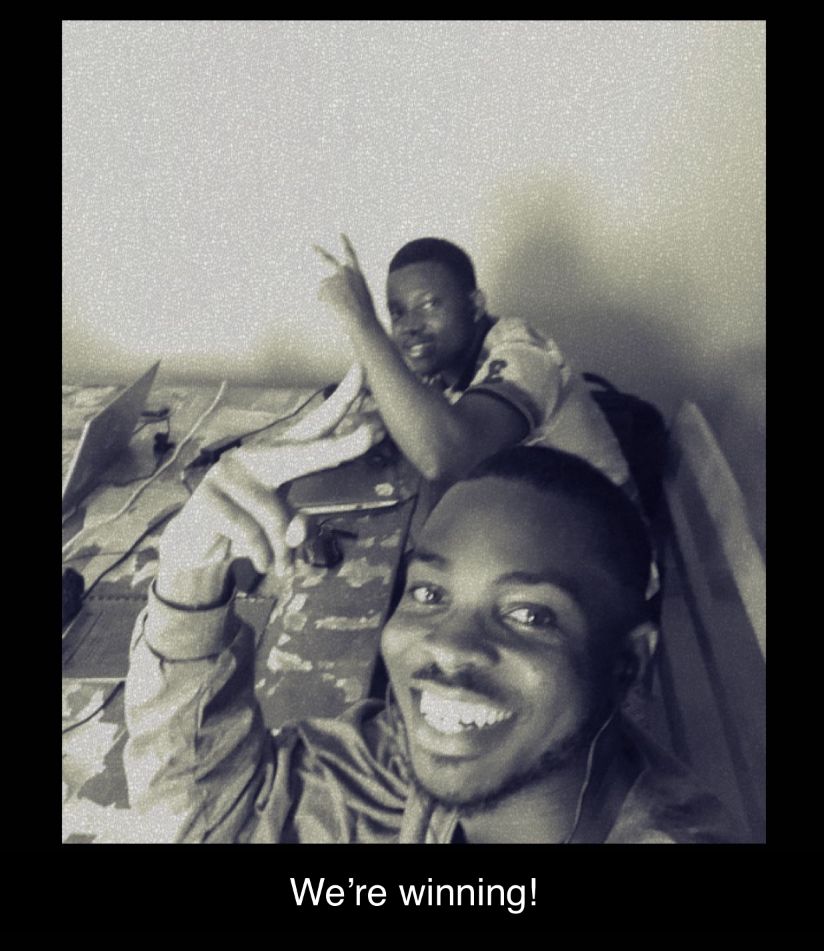 JRO & I during one of our building sessions in one of the hostels we visited, Diabene was present but missing in the snap selfie.
Version 1 had to be ready quickly.
Expanding the Team
At some point we needed help managing infrastructure.
Diabene suggested bringing in Nana Kwesi Asante (opens in new tab), also known as TopboyAsante.
Trust was built quickly.
We handed over infrastructure responsibilities to him and he delivered exceptionally well. He eventually became our Chief Infrastructure Officer.
Our routine became simple.
Code all night. Sleep during the day.
The Licensing Nightmare
Then came the hardest phase.
Compliance.
To process payments and run certain services legally, we needed government authorization and external integrations.
That process almost broke me.
The pressure of deadlines and regulatory requirements was overwhelming.
We gathered the necessary documents and started the application process.
Eventually we had a meeting with the external service provider's team. Their CEO and technical team were present.
I led the conversation for our team.
We explained our system and how everything worked.
They approved us.
That moment felt incredible.
But the work was not over.
Building the USSD System
JED needed to support USSD services.
The problem was simple.
We were four people. Only three of us were active software engineers.
And none of us had the money to hire someone else.
So I told the team not to worry.
I would design and build the USSD system.
That night I researched multiple platforms and eventually discovered Arkesel's (opens in new tab) documentation.
I stayed up the entire night and built the first working USSD version in plain JavaScript.
Later we rebuilt and scaled it using TypeScript.
And it worked.
The Reality of Startup Life
We were excited.
But reality hit us quickly.
Everything worked perfectly from an engineering perspective.
Then real users started using the system.
And the complaints started coming in.
At that moment I felt like we had shipped something terrible.
One morning around dawn, JRO called me jokingly and said:
Yo Elabo, the votes people are casting are not counting.
I panicked.
That entire day I stayed locked in my room fixing the problem. I did not eat. I missed lectures.
Eventually we fixed it.
Version 1 was rough.
But we had launched.
And we made our first Ghana cedi in 2024.
Rebuilding JED
In 2025, during our national service year, we met again to plan a complete rewrite of JED.
New infrastructure. New UI. Better architecture.
We rebuilt everything.
Again, the team asked me to rebuild the USSD system.
And again, I delivered it.
Version 2 launched successfully.
That year we hosted multiple events and processed in revenue, close to half a million Ghana cedis through the platform.
 Diabene and I on the red carpet representing JED at Miss Ignenia, one of our biggest events on KNUST campus
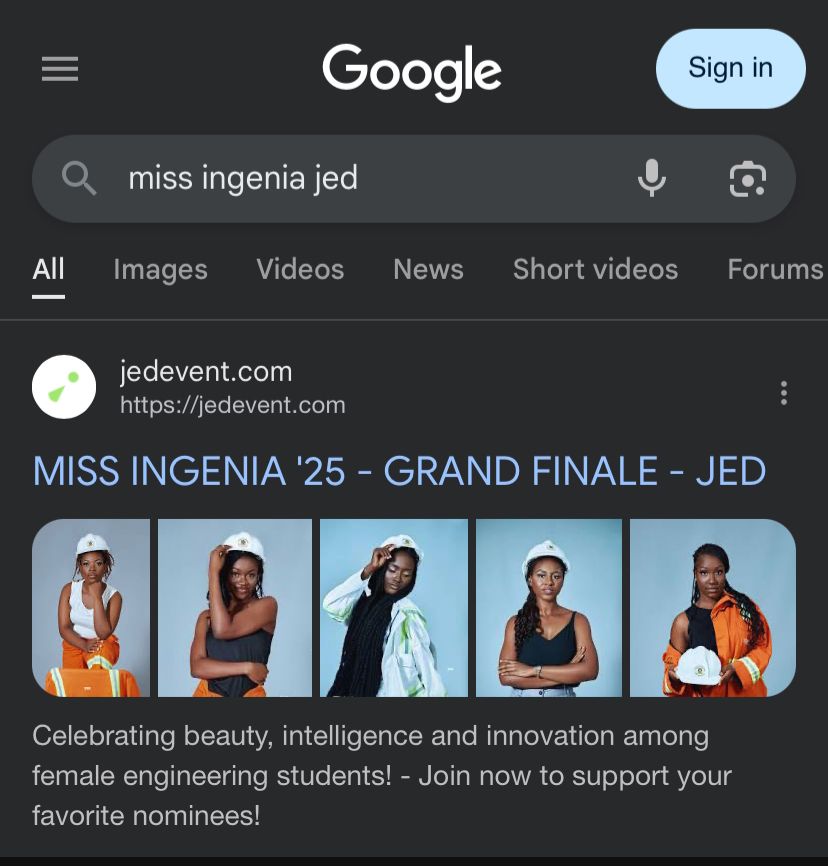 Our SEO game was strong, Miss Ignenia nominees ranking on Google search
Seeing customers happy and distributing JED merchandise during events on campus was an unforgettable moment.
The Next Chapter
Now we are working on Version 3.
This version includes another infrastructure upgrade and deeper product improvements based on everything we learned.
We now have official licenses and partnerships with one of the leading product companies in Ghana to improve the experience for our users.
You can explore the platform here: jedevent.com (opens in new tab)
My Team
None of this would exist without the team.
I want to acknowledge them.
- Joshua Richardson Owusu (JRO) (opens in new tab) — CEO
- Diabene Yaw Addo (opens in new tab) — CTO
- Nana Kwesi Asante (TopboyAsante) (opens in new tab) — CIO
- Evans Elabo — COO (That's me)
The funniest part?
None of us studied computer science or computer engineering.
We simply loved playing the game.
Final Thoughts
Building JED was confusing, challenging, and sometimes painful.
But it taught us what it means to build something real.
It taught us trust, resilience, and how to keep going even when things break.
If there is one lesson I want to share, it is this.
It is possible.
You are capable.
Just make sure you choose your friends carefully. Choose the kind of friends who believe in the same dream and are willing to work for it.
Friends who walk the talk.
Evans Elabo — COO, JED